How to Style a Cross-Cultural Wedding in BC Without the Clash
A founder's guide to styling a fusion wedding in British Columbia: one visual language that lets a sofreh aghd, a mandap, a tea ceremony, and a Western reception feel like a single celebration.
The first fusion wedding I ever styled myself was, in a quiet way, my own life. I am Persian-Canadian, I married into a Punjabi Sikh family, and somewhere between my mother's sofreh aghd and my husband's milni I learned that two beautiful traditions, set side by side without a plan, will fight each other in photographs. They did not fight because the cultures clash. They fought because the gold of one ceremony was a brassy yellow and the gold of the other was a warm rose, and the eye reads that as a mistake even when the heart does not.
Since then I have styled Persian, Punjabi Sikh, Hindu, Chinese, and Western celebrations, and now I run a decor rental business out of Fort Langley that does this work week after week across British Columbia. A cross-cultural wedding is not a compromise where each family gives something up. Done well, it is one celebration that speaks two languages fluently. This is how I get there, and how the right rentals make it possible without buying a warehouse of decor you will use once.
How do you make two cultures share one palette?
Pick three constants that carry across every ceremony: a single metal tone, two anchor colours that both traditions already love, and one repeating texture. Let each culture express itself through its own ritual objects and florals, but keep those three constants identical from the sofreh aghd to the reception. The eye reads the constants as one wedding.
Start with the metal, because metal is the loudest thing in the room and the easiest to get wrong. Persian sofreh styling leans into mirrors and ornate gold. Punjabi and Hindu decor loves gold too, but often a redder, deeper gold. Chinese tea ceremonies bring their own warm gold and a signature red. Choose one metal tone for the whole event, whether that is a soft champagne gold, a true antique brass, or a brushed rose, and hold it across mirror frames, candelabra, charger plates, and stands. When the metal matches, the cultures stop competing.
Then choose two anchor colours that already live in both traditions. Burgundy and gold work across Persian, Punjabi, and Chinese aesthetics. Deep green and ivory bridge South Asian and Western tastes beautifully. Blush and brass soften a Persian and Western blend. You are not flattening anyone's culture. You are giving every ceremony a shared backbone so the differences feel intentional. Our linen rentals are usually where I lock the palette first, because a table runner sets the tone for everything stacked on top of it.
The third constant is texture. One repeating material, hammered metal, raw silk, fluted glass, or aged wood, threaded through every zone tells the guest, on a level they never consciously notice, that these rooms belong to the same family.
How do you keep ritual objects from clashing?
Treat each tradition's sacred objects as untouchable and style the negative space around them instead. The sofreh spread, the Guru Granth Sahib palki, the mandap fire, and the tea set never get redesigned to match a theme. You match the backdrops, stands, florals, and linens that surround them so the room frames the ritual rather than fighting it.
The objects that carry meaning are not where you economize or coordinate. A sofreh aghd has its mirror, candelabra, honey, and the spread laid on fine cloth. A Sikh ceremony centres on the Guru Granth Sahib under a canopy, with strict respect for how that space is treated. A Hindu mandap has its fire and four pillars. A Chinese tea ceremony has the tea set, the red, and seating for elders. None of that bends to a colour story.
What you control is everything around those objects. If you read more about the Persian sofreh aghd and the Sikh anand karaj, you will see how different the sacred centres are, and why I never try to make them rhyme. Instead I make the backdrops behind them rhyme. Same backdrop silhouette, same drape weight, same florals in the shared palette. The guest's eye travels from one ceremony to the next and registers continuity, even though the heart of each space is entirely its own.
How should you zone a venue across multiple ceremonies?
Map the venue into distinct zones before you touch a single rental, one zone per ceremony plus the reception, and give each zone a clear visual centre. Use repeating decor elements to carry the shared palette between zones, and reserve one anchor piece, a backdrop or mandap, as the hero each space is built around. Zoning is what stops a fusion wedding from reading as clutter.
Most BC fusion weddings move through three to five distinct moments: a sofreh or tea ceremony, a milni or baraat arrival, the main ceremony, and a Western-style reception. Sometimes a sangeet the night before, which deserves its own look entirely. If you try to hold all of that in one undifferentiated room, it becomes noise.
So I zone. A garden corner or a draped alcove becomes the sofreh. The ballroom's far wall becomes the ceremony backdrop. The reception lives at the tables. Each zone gets one hero, usually a backdrop or a structural moment, and then plinths and pillars carry florals and candles between zones to stitch them together. The plinths repeat. The florals repeat. That repetition is the thread.
The practical advantage of renting here is enormous. A multi-zone wedding needs a lot of structural pieces for a single day. Owning them makes no sense. You rent the backdrops, the plinths, the centerpieces, use them across every zone, and return them. For a sense of how the multi-day structure actually unfolds, the breakdown of Indian wedding ceremonies and their costs is the most honest map I can point couples to.
Should you rent or buy decor for a multi-event wedding?
Rent the structure and the volume; buy only the few keepsakes that carry personal meaning. A multi-event fusion wedding needs more decor than any single-use purchase can justify, and renting runs roughly a quarter to a third of buying. Keep the sofreh mirror or a family heirloom. Rent the backdrops, linens, charger plates, and centerpieces you will never use again.
Here is the math families do not always run. A fusion wedding might need two backdrops, forty centerpieces, three hundred charger plates, a dozen plinths, and yards of linen, all for one weekend. Buying that is thousands of dollars and a storage problem you inherit for life. Renting the same set typically costs a quarter to a third of the purchase price, and the warehouse problem is mine, not yours.
What I tell couples to buy is short and personal: the sofreh mirror you will pass down, a hand-embroidered cloth, a tea set that means something. Those carry forward. Everything structural, the backdrops, stands, glassware, and table linens, is exactly what a rental inventory exists for. You get the scale and the polish of a high-budget wedding without owning a single piece of it afterward.
There is also a quality argument. Rented inventory in this business is maintained, replaced, and refreshed each season. The matched set of charger plates I send out is consistent in a way that a pieced-together purchase across three online orders rarely is, and consistency is the whole game in cross-cultural styling.
How do you blend a tea ceremony with a Western reception?
Anchor the tea ceremony in its own intimate corner with the traditional red and the family's tea set, then carry one element of that warmth, the same metal and one shared bloom, into the reception. The reception stays clean and Western in structure but borrows a thread of the tea ceremony's colour so the two moments feel related rather than bolted together.
A Chinese tea ceremony is intimate and seated, centred on elders and the tea ceremony ritual itself. It does not need a grand backdrop. It needs a warm, defined corner, good light, comfortable seating for the parents and grandparents, and the family's own tea set in pride of place. I style that corner with the shared metal and a single bloom from the wedding palette, and I keep it small on purpose.
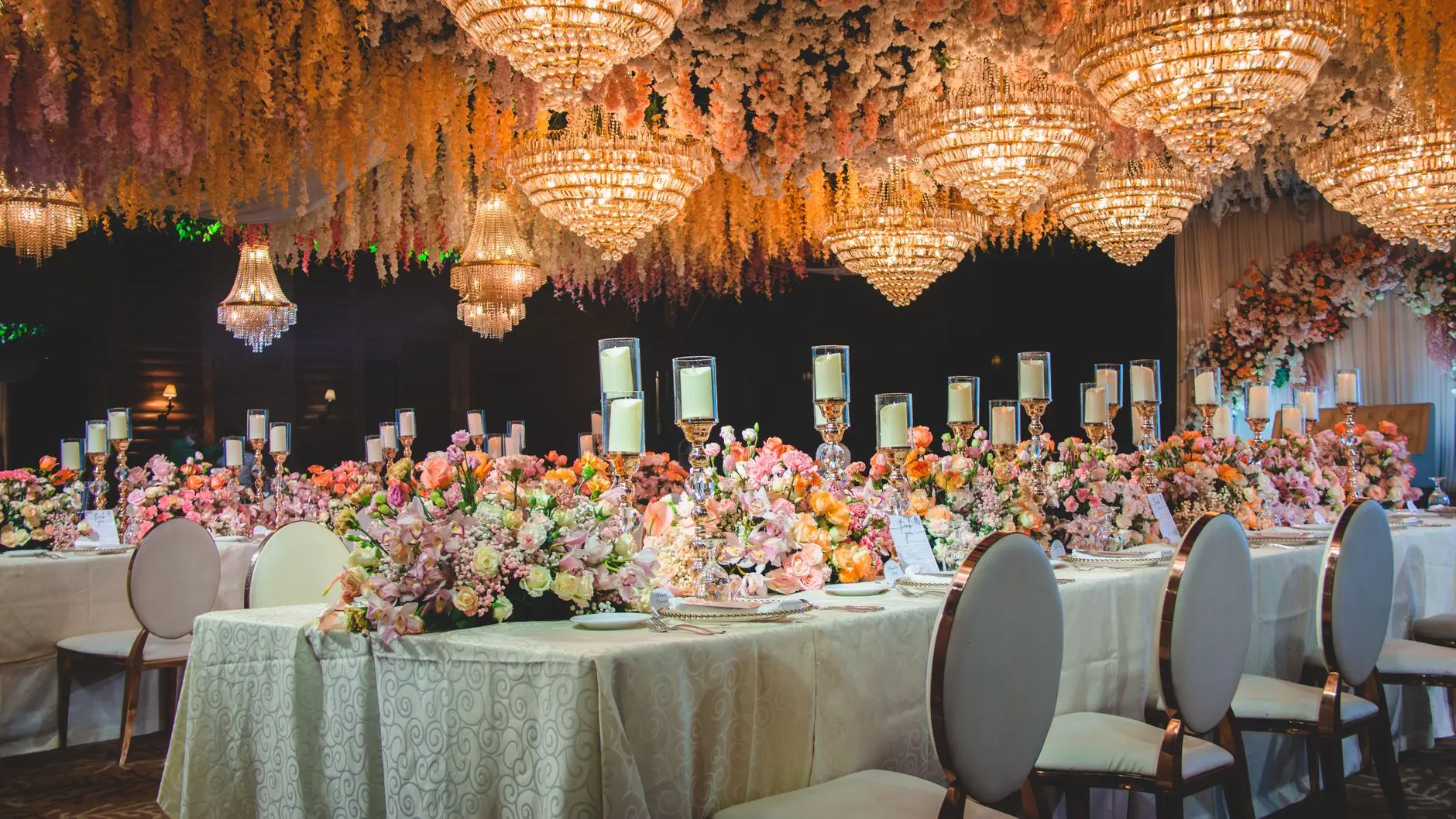
The reception then does what Western receptions do well: long clean tables, considered lighting, florals that breathe. The connective tissue is that one shared bloom and the identical metal tone. A guest who sipped tea in the morning sees the same warm gold on the reception charger plates and feels, without naming it, that the day held together. That is the entire trick, repetition of two or three constants across rooms that are otherwise allowed to be themselves.
What changes between a Lower Mainland and an Okanagan fusion wedding?
Lower Mainland fusion weddings tend to be larger, multi-day, and held in banquet halls or hotels with deep South Asian and East Asian communities nearby. Okanagan weddings lean smaller, often at wineries or waterfront venues with sweeping natural backdrops. The Lower Mainland needs decor that builds an indoor world; the Okanagan needs decor that complements a view rather than competing with it.
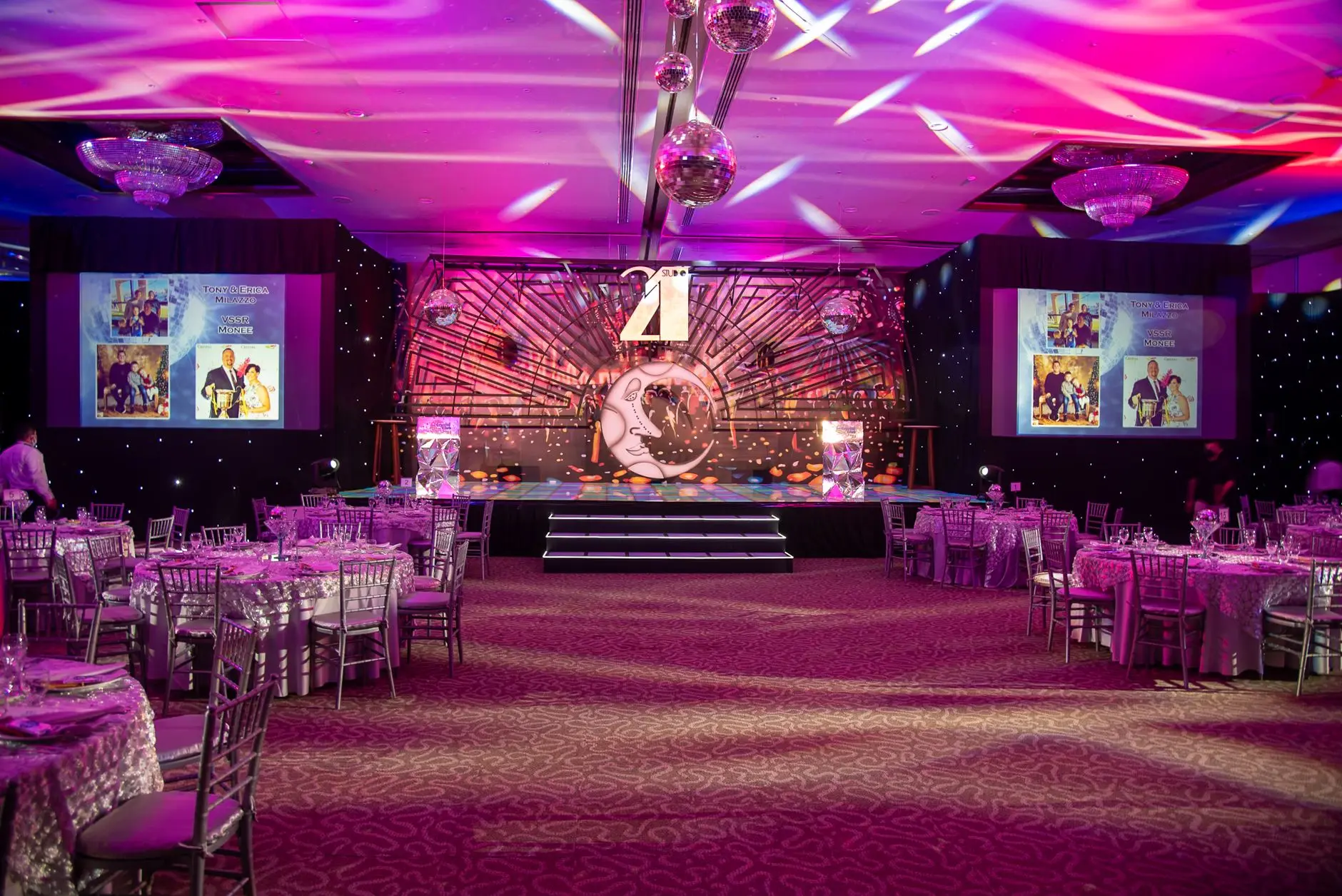
In the Lower Mainland, around Vancouver and Surrey, fusion weddings are frequently large, multi-day affairs in banquet halls and hotel ballrooms. The room is a blank box, so the decor builds the entire world: full backdrops, dense florals, structural lighting, the works. The community infrastructure is mature, which means guest counts run high and the styling has to scale.
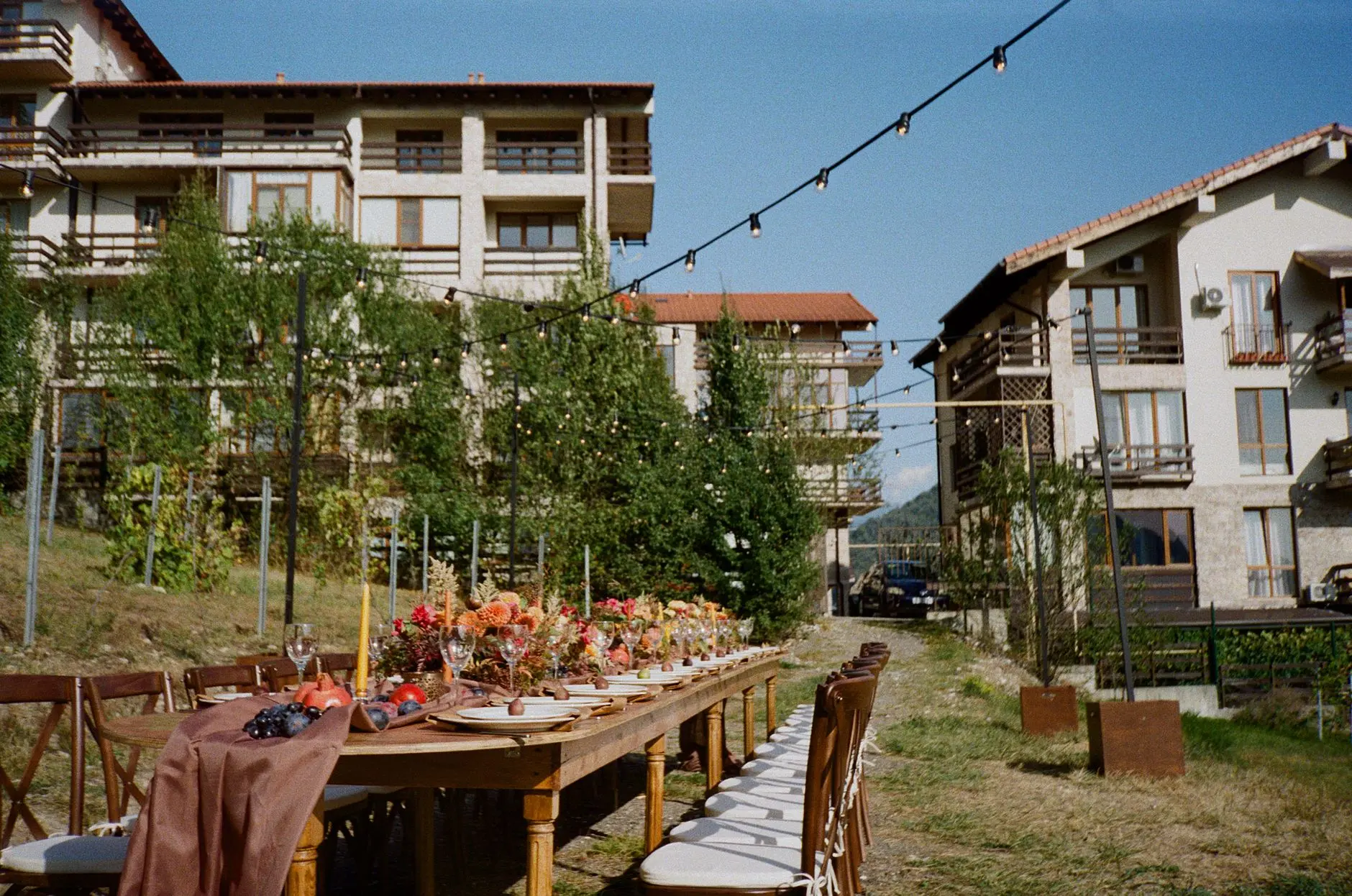
In the Okanagan, the weddings I style tend toward wineries, garden venues, and waterfront settings where the landscape is already doing half the work. Here the mistake is overdressing. A heavy indoor backdrop in front of a lake view looks like you are apologizing for the view. So the palette stays the same, the metal stays the same, but the volume comes down. Lighter structures, more negative space, florals that echo the surroundings rather than overpower them.
The shared visual language travels between both regions unchanged. What flexes is density. A couple blending two cultures in a Surrey banquet hall and a couple blending the same two cultures at a Kelowna winery use the same three constants, just dialed to very different rooms.
Frequently Asked Questions
How far in advance should we book decor for a multi-event fusion wedding?
Earlier than a single-event wedding, because you are reserving more inventory across more zones. I recommend locking your rentals six to nine months out for a multi-day fusion wedding, especially for peak season between May and September in BC. The structural pieces, backdrops, plinths, and large quantities of matched linens and charger plates, are the items that book out first.
Can one decor palette really serve a Persian, a Sikh, and a Western ceremony?
Yes, and it is more natural than people expect. The key is choosing anchor colours and a metal tone that already exist in all three traditions, then letting each ceremony's own ritual objects and florals carry the cultural specificity. Burgundy and gold, or deep green and ivory, sit comfortably across Persian, South Asian, and Western aesthetics. The palette unifies; the rituals differentiate.
Do you have to give up tradition to make a fusion wedding look cohesive?
No. Cohesion comes from styling the space around sacred objects, never from altering the objects themselves. The sofreh spread, the mandap fire, the Guru Granth Sahib, and the tea set stay exactly as tradition requires. What you coordinate is the backdrops, linens, stands, and florals that frame them. Nobody's heritage gets diluted.
Is renting decor practical when we need so many different setups?
Renting is more practical for fusion weddings than for any other kind, precisely because you need so many setups. Buying enough decor for three to five distinct zones for one weekend is rarely worth the cost or the storage. Renting runs roughly a quarter to a third of buying, the inventory is maintained and matched, and the structural pieces travel between your ceremony zones to keep everything consistent.
How do we style a fusion wedding outdoors in the Okanagan without overdoing it?
Keep the same palette and metal you would use indoors, but reduce the density. At wineries and waterfront venues the landscape is your largest design element, so use lighter structures, leave more negative space, and choose florals that echo the natural surroundings. The cultural specificity still comes through in the ritual zones; the setting just lets the decor breathe.
Sources
- The Knot, Cultural and Multicultural Wedding Traditions: theknot.com/content/multicultural-wedding-traditions
- WeddingWire Canada, Wedding Planning Guides: weddingwire.ca/wedding-ideas
- Brides, How to Plan a Fusion Wedding: brides.com/how-to-plan-a-multicultural-wedding
- Martha Stewart Weddings, Wedding Color Palette Guides: marthastewart.com/weddings/colors
- Tourism Kelowna, Weddings and Venues in the Okanagan: tourismkelowna.com/plan/weddings